

Ratification Date: 09/12/2025
Next Review Date: 09/12/2026
NHS Skin Self‑Help Hub
Contents
This page brings together trusted NHS and British Association of Dermatology (BAD) resources for managing common skin conditions at home.
Patient-facing self-help resources for common skin conditions
National & Specialist Patient Information
British Association of Dermatologists — Patient Information Leaflets (PILs)
High-quality, peer-reviewed PDFs covering many common conditions (eczema, acne, psoriasis, warts, fungal infections, contact dermatitis).
- Patient Information Leaflets – British Association of Dermatologists
- The BAD Patient Information Leaflet QR codes
- Home – BAD Patient Hub
- A-Z Conditions & Treatments – BAD Patient Hub
- Symptoms and self-help | NHS inform
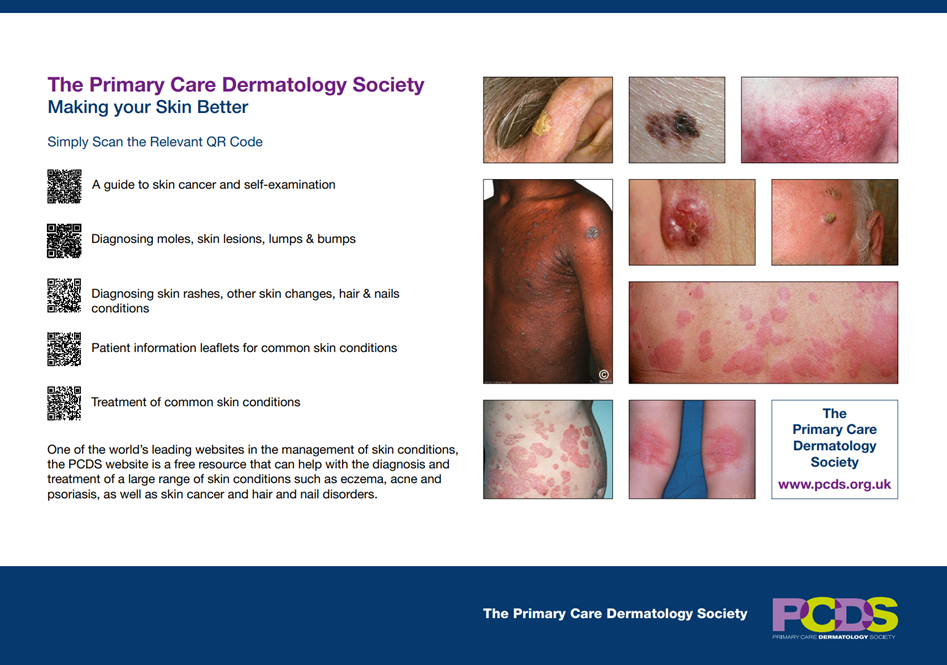
Primary Care Dermatology Society
Information for Patients and carers
- Understanding the language of dermatology
- Self-examination of molesand other skin lesions
- Skin lesion diagnostic tool
- The UK’s national skin cancer prevention campaign
- General dermatology diagnostic tool
- Medications for skin conditions that can be purchased over-the-counter without a prescription
- Videos on how to apply:
- Dressings and bandaging techniques
- Patient information leaflets
- Patient support groups
- Orphanet – support for rare skin conditions
Videos on Skin Conditions
Understanding Common Skin Conditions (YouTube video)
Psoriasis (YouTube video)
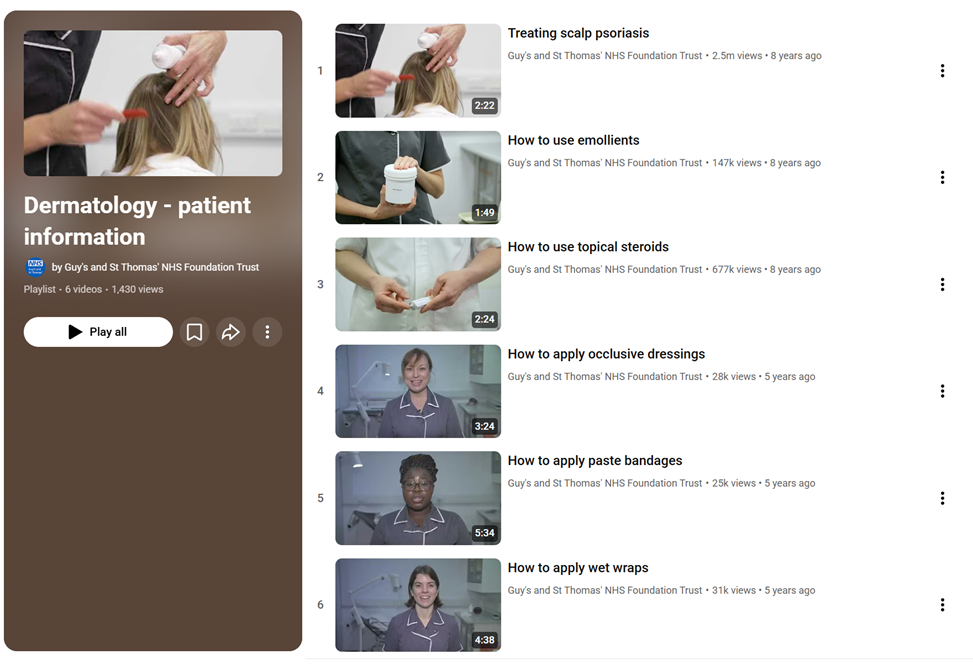
Dermatology – Patient Information – Guys & St Thomas NHS Foundation Trust
Skin Conditions Videos | Common Skin Problems
Quick list by condition
Patient guidance on symptoms, triggers, how to use emollients, steroids and when to seek help.
Covers mild vs moderate disease, pharmacy self-care options, topicals (benzoyl peroxide, retinoids), and when to see a GP. Useful for “what to try first” advice.
Overview of common presentations, simple GP-led treatments, lifestyle tips and signposting to support groups. Good for reassurance and next steps.
Guidance on recognising tinea/athlete’s foot, OTC antifungal creams/sprays and prevention (keep feet dry, footwear advice). Useful short self-care checklist.
Simple measures (occlusion, OTC options), and when to seek treatment.
Advice about identifying irritants/allergens, immediate management (avoidance, emollients, topical steroids) and hand dermatitis tips.
Describes typical ring-shaped rashes, first-line topical antifungals and hygiene /household advice to avoid spread.
Explains what hives (urticaria) are, why they occur, and common triggers such as allergies, infections or heat. It includes self-care advice, when antihistamines can help, and signs that require medical attention.
Outlines symptoms such as intense itching and the characteristic rash, how the mite infestation spreads, and how it is treated with prescribed creams. It also covers household/contact management to prevent reinfestation.
Describes the different types of hair loss (e.g., pattern baldness, alopecia areata, telogen effluvium), their causes, and what is normal shedding versus concerning. It provides guidance on treatments, self-care, and when to see a GP.
Explains common causes—from dry skin to allergies, eczema or underlying conditions—and offers practical self-help strategies like moisturising and trigger avoidance. It also advises when persistent itch needs medical review.
Outlines what vitiligo is, how pigment loss occurs, typical patterns of skin changes, and possible triggers. It details treatment options, including creams, light therapy and cosmetic camouflage, as well as emotional and practical support.